Wedding and Engagement Ring Metals Compared: Platinum, Gold, Palladium, and Modern Alternatives
Vendor pages list metals. This guide explains what each one actually means for your ring over 30 years of daily wear.
Updated June 2026
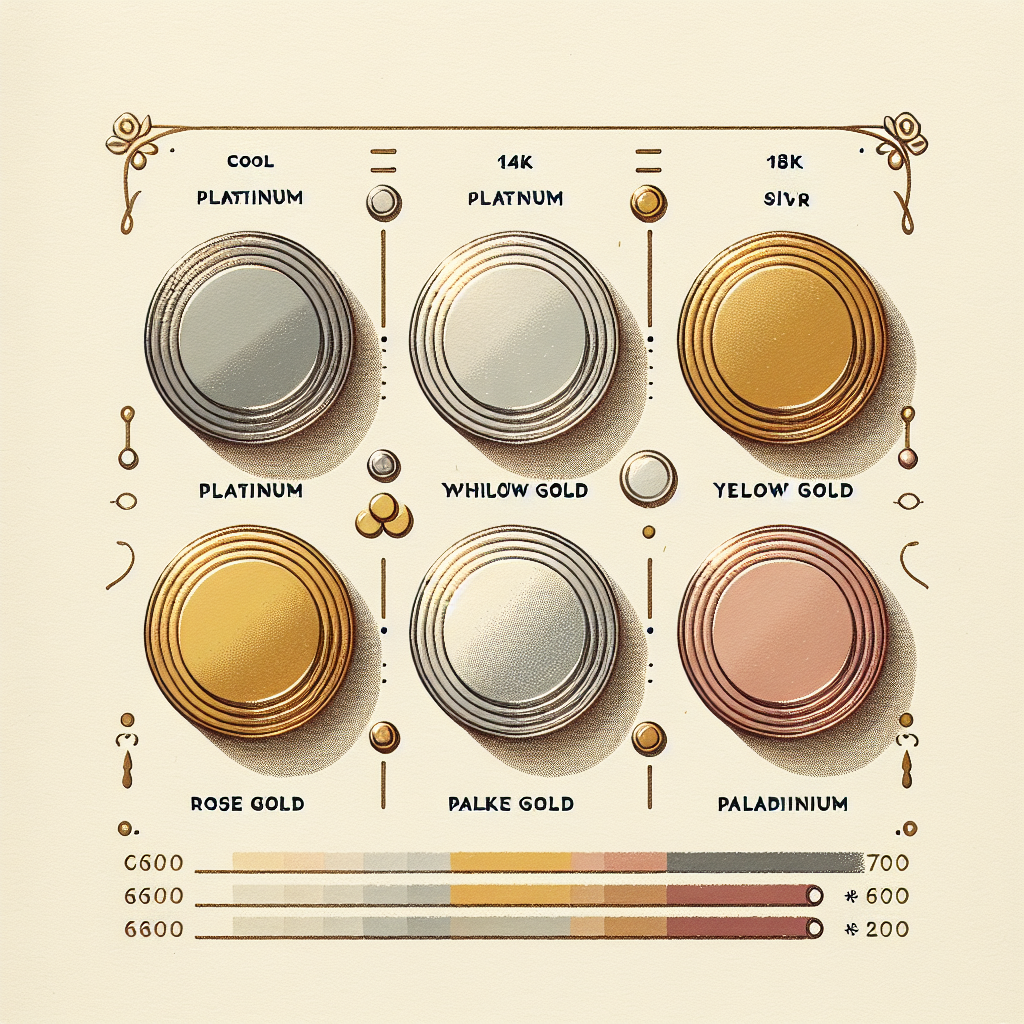
Quick Comparison
| Metal | Colour | Allergy-safe | Replating | Band price |
|---|---|---|---|---|
| Platinum (PT950) | Cool white-silver | Yes (nickel-free) | None required | $800-$1,800 plain band |
| 18k White Gold | Bright white (with rhodium plating) | Depends on alloy (nickel risk) | Rhodium every 2-5 years ($40-$80) | $700-$1,500 plain band |
| 14k White Gold | Bright white (with rhodium plating) | Depends on alloy | Rhodium every 2-5 years | $400-$900 plain band |
| 18k Yellow Gold | Warm, rich yellow | Yes (pure gold is hypoallergenic) | None required | $600-$1,300 plain band |
| 14k Yellow Gold | Warm yellow (slightly lighter than 18k) | Yes | None required | $350-$800 plain band |
| Rose Gold (14k or 18k) | Warm pink | Typically yes (copper alloy, not nickel) | None required | $350-$1,300 depending on karat |
| Palladium | White-silver (similar to platinum) | Yes | None required | $500-$1,000 plain band |
| Titanium / Tungsten / Cobalt | Grey to silver-grey | Titanium and cobalt: yes. Tungsten: check for cobalt binder allergy | None | $100-$500 |
Platinum (PT950)
Platinum is 60% denser than 14k gold. The extra weight is felt as a quality cue. Platinum scratches more visibly than gold but the metal is merely displaced, not lost. Preferred for high-security settings because its density holds prongs firmly. Hypoallergenic: suitable for nickel-sensitive wearers.
Develops a satin patina. Does not wear thin; metal moves rather than loses. Polishable to original bright finish at any time.
18k White Gold
18k white gold is 75% pure gold with white-metal alloys (palladium or nickel). If nickel is used, there is an allergy risk (roughly 10% of people are nickel-sensitive). Request palladium-alloyed white gold if allergy is a concern. Rhodium coating initially makes white gold brighter than platinum.
Requires regular rhodium replating to maintain white colour. Softer than 14k, shows scratches slightly more readily. Long-term cost includes replating.
14k White Gold
For daily wear, 14k often outperforms 18k in scratch resistance. 58.3% pure gold. Good balance of durability and cost. Same rhodium plating requirement as 18k.
More durable than 18k white gold due to higher alloy content. Still needs replating. Most cost-effective white metal entry point.
18k Yellow Gold
The traditional ring metal for centuries. 18k has a distinctly richer colour than 14k. Pairs well with warm skin tones and coloured gemstones. No plating needed. Yellow gold against a coloured diamond or sapphire can mask warmth in the stone's colour, which can be an advantage for slightly tinted diamonds.
Softer than 14k, shows scratches more readily but polishes beautifully. Historically the preferred ring metal. Does not tarnish.
14k Yellow Gold
Most US engagement ring solitaires are set in 14k yellow gold or 14k white gold because the durability is better suited to a ring worn every day for life. 14k yellow gold is slightly less vividly yellow than 18k but the difference is subtle in a finished ring.
More durable than 18k, holds its shape better over decades of wear. The standard choice for engagement rings requiring maximum daily durability in yellow gold.
Rose Gold (14k or 18k)
Rose gold has surged in popularity since approximately 2012. The copper content makes it harder than equivalent yellow gold. It does not require plating. The warm tone flatters most skin tones. Cannot be mixed with white gold without a visible colour difference at the join.
Very durable (copper alloy adds hardness). The pink colour is permanent and inherent to the alloy, not a coating. Becomes slightly rosier over decades as copper develops a very gentle patina.
Palladium
Palladium is a platinum-group metal with a near-identical appearance to platinum but significantly lighter and less expensive. It is a good alternative for people who want platinum's hypoallergenic and no-plating properties at lower cost. Less widely available from jewellers than gold or platinum.
Similar to platinum in appearance but lighter weight. Does not tarnish or need plating. Less dense than platinum (noticeable as lighter on the hand).
Titanium / Tungsten / Cobalt
Men's alternative metals. Modern, minimal, and hard-wearing. The inability to resize is a significant commitment: finger size can change over years due to weight fluctuation, age, and temperature. Many couples opt for a second silicone ring for active wear and keep the precious metal ring for formal occasions.
Extremely scratch resistant (especially tungsten). Cannot be resized. Tungsten and cobalt are also brittle under sharp impact. Suitable for active lifestyles where gold or platinum would scratch excessively.