Wedding Band Styles: Classic, Eternity, Pavé, and Beyond
Wedding band styles differ more in structural terms than they look from the outside. Here is what each type really means for daily wear, resizing, and maintenance.
Updated June 2026
Hardness reference (Mohs scale)
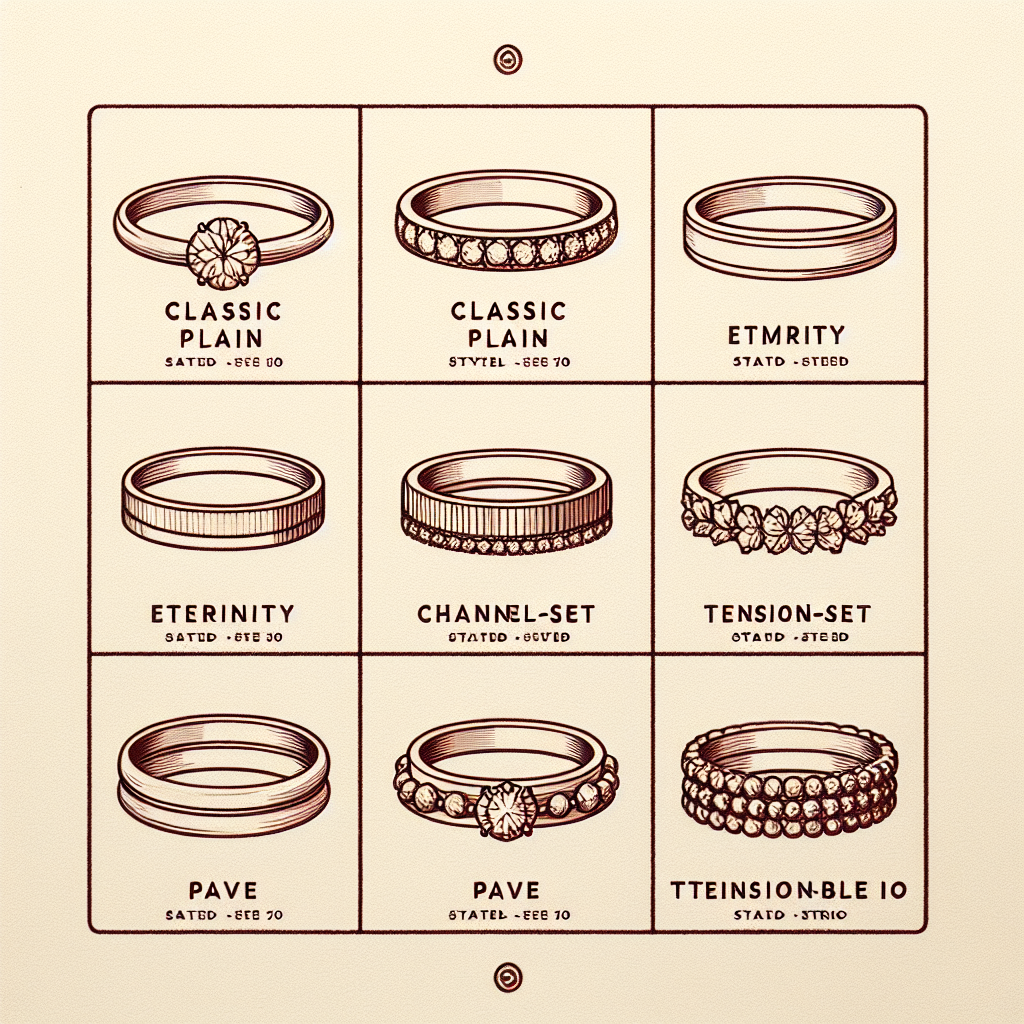
Classic Plain Band
$300 to $1,500
A smooth, unadorned loop of metal in a consistent width. The most common men's wedding band style and a significant percentage of women's choices too. Its appeal is permanence: it goes with everything, ages well, and does not follow fashion cycles. Classic bands are available in 2mm to 8mm widths; the 4-5mm range is most popular for men and 2-3mm for women pairing with an engagement ring.
Eternity Band
$1,500 to $6,000+
Diamonds (or gemstones) set continuously around the full circumference of the band, so the ring sparkles from every angle. The eternity band carries strong symbolic weight because it has no beginning and no end, like the marriage it represents. Full eternity bands are sometimes used as wedding bands at the ceremony; they are more commonly given as anniversary or push-present gifts after the wedding.
Anniversary Band
$800 to $4,000+
Functionally identical to an eternity band: a band with stones set around all or part of the circumference, gifted at a milestone anniversary. Half-eternity versions, with stones on the front 180 degrees only, are more common because they can be resized and are more comfortable against the finger. Some couples buy a plain wedding band at the ceremony and add a diamond anniversary band at the first, fifth, or tenth anniversary as the relationship milestones accumulate.
Pavé / Milgrain Set
$600 to $2,500
Pavé bands have small diamonds set in tiny prongs or beads along the band surface, with minimal visible metal, creating a continuous sparkle effect. Milgrain refers to a beaded edge detail that runs along the rim of the setting, giving the band an antique or filigree appearance. Milgrain without pavé is a decorative texture option for plain or partially-set bands. Pavé-milgrain combinations are common in vintage-inspired wedding bands.
Channel-Set
$700 to $2,000
Diamonds sit in a channel carved into the band surface, with no prongs holding them, just the channel walls. This creates a smooth, flush surface where stones are protected and less likely to snag or fall out than in pavé. Channel-set bands have a clean, graphic quality and hold up well to daily wear. They are one of the more practical stone-set band options for active people.
Tension / Stackable
Tension: $800 to $2,500 / Stackable sets: $300 to $1,500
Tension settings hold the stone suspended between two ends of the band by metal pressure alone, with no prongs or bezel. The effect is visually dramatic: the stone appears to float. However tension settings require specialist tools and training to work with, cannot be resized, and require professional inspection more frequently than other settings. Stackable bands are the opposite: simple narrow bands designed to be worn as a set of two or three rings stacked together, with each band priced individually.
Men's Alternative Metals
Titanium, tungsten carbide, cobalt chrome, and silicone are all increasingly common men's wedding band options. They offer significant advantages in hardness and scratch resistance, but come with a critical limitation: most cannot be resized in any traditional sense.
| Metal | Price | Resizable | Notes |
|---|---|---|---|
| Titanium | $100-$400 | No | Lightweight, very hard, hypoallergenic |
| Tungsten carbide | $100-$350 | No | Scratch-resistant, heavier, brittle under impact |
| Cobalt chrome | $150-$500 | No | Shiny like white gold, harder than platinum |
| Silicone | $15-$40 | Yes (buy new size) | Active lifestyle, not suitable for formal wear |
| Damascus steel | $200-$600 | No | Decorative pattern, highly distinctive |